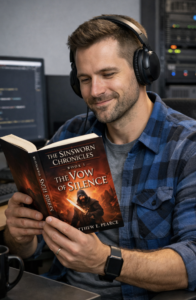
IT managers spend their days balancing systems, people, priorities, and pressure. They are expected to think ahead, manage risk, communicate clearly, and keep moving even when the full picture is not yet visible. That is exactly why a strong fantasy novel can be more than entertainment. The right story sharpens judgment, restores imagination, and reminds leaders what it feels like to carry responsibility through uncertainty.
The Sinsworn Chronicles, Book I: The Vow of Silence deserves a place on that shelf. For IT managers who live in a world shaped by cybersecurity concerns, AI governance, cloud decisions, staffing pressure, and nonstop change, this novel offers something valuable: a story built around tension, trust, silence, duty, and the cost of leadership. In a time when IT leadership is being pushed to combine technical strength with governance, resilience, and human judgment, fiction that reflects those themes can land harder than another white paper or trend report. Current reporting and research keep pointing IT leaders toward trust, adaptability, and responsible decision-making as central parts of the job.
Leadership Under Pressure Feels Different in a Story
A major part of IT management is decision-making under incomplete information. That is true whether a team is evaluating an incident, rolling out a new platform, handling an outage, or deciding how fast to move with AI adoption. The discipline itself is built around aligning technology with business needs, managing change, and making decisions that affect people as much as systems, which is why Wikipedia’s overview of information technology management remains a useful baseline reference. But definitions alone do not build instinct. Stories do.
That is where The Sinsworn Chronicles, Book I: The Vow of Silence becomes compelling for IT managers. A good fantasy novel places characters into morally complex situations where every move has a cost. That mirrors the real weight of leadership. IT managers do not just choose tools. They choose tradeoffs. They choose what gets prioritized, what gets delayed, what gets funded, what gets protected, and what level of uncertainty a business can live with. Reading a novel built around solemn obligations, hidden motives, and controlled power can resonate deeply with the mindset required to lead a modern technology team. The appeal is not escapism alone. It is recognition.
The Best IT Leaders Need Imagination, Not Just Technical Control
There is a reason the strongest technology leaders are not just task managers. They are interpreters. They translate complexity, anticipate what is coming, and help teams move through unfamiliar ground. The World Economic Forum’s Future of Jobs Report 2025 highlights how AI, big data, cybersecurity, and technological literacy are rising in importance, while human qualities such as resilience, flexibility, curiosity, and lifelong learning remain essential alongside them. For IT managers, that means success is no longer about technical oversight alone. It is about perspective.
Fantasy helps build that perspective because it stretches the mind beyond routine. It demands that the reader track layered systems, competing loyalties, hidden histories, and consequences that unfold over time. That is not far from what an IT manager does in real life. A novel like this can strengthen the part of leadership that sees patterns early and senses danger before it becomes obvious. It can also refresh leaders who are tired of reading only operational material. In that sense, the best fantasy novels of all time are not just enjoyable books. They are mental training grounds for leaders who need both structure and vision.
Trust, Silence, and Governance Matter in Both Fantasy and IT
One of the strongest reasons IT managers should read this book is thematic. The title itself signals restraint, consequence, and unspoken weight. Those are not abstract ideas in technology leadership. They are daily realities. Strong IT leadership now requires formal thinking around trust, governance, and risk, especially as organizations move faster with AI and automation. The NIST AI Risk Management Framework exists because organizations need practical ways to build trustworthy AI and manage the risks tied to its design, use, and evaluation. That should sound familiar to any leader responsible for systems that affect operations, customers, and security posture.
A fantasy world built around vows, silence, obligations, and unseen forces can echo the same core leadership questions. What do you protect? What do you reveal? What power should be used, and what power should be restrained? For IT managers, those are governance questions dressed in different clothes. That is what makes the reading experience relevant. It is not that the novel teaches a framework. It is that it reinforces the emotional and ethical mindset behind one.
Cybersecurity Leadership Is About More Than Tools
IT managers are increasingly forced to think like defenders. They may not all carry the title of CISO, but they are still involved in security posture, policy enforcement, vendor assessment, and response planning. Agencies such as CISA publish cybersecurity best practices because foundational discipline still matters: preparation, prevention, continuity, and clarity. CISA has also continued to push governance and accountability through updated cross-sector cybersecurity performance goals.
That is why dark or high-stakes fantasy can resonate with IT managers. In a strong fantasy narrative, danger is rarely obvious at first. Threats emerge through signs, patterns, rumors, fractures in trust, and failures to take warnings seriously. That is how many real technology problems grow. A book like The Vow of Silence can speak to the defensive instincts IT managers need every day. It reinforces the reality that leadership is not merely reacting to visible danger. It is noticing what others ignore and acting before the cost becomes catastrophic.
The Role of the IT Leader Is Expanding
The modern IT leadership role is changing quickly. Reporting from CIO on how AI is changing the CIO role points to a stronger emphasis on governance, risk management, and cross-functional alignment rather than pure technology deployment. CIO has also reported ongoing concern around AI trust and governance as organizations push ahead with adoption. That shift matters because it confirms what many IT managers already feel: the job is broader, heavier, and more strategic than it used to be.
That is another reason this novel fits the audience. Fantasy often centers on leaders who are forced into roles bigger than they expected. They carry hidden burdens. They make decisions with imperfect information. They absorb pressure from every direction. IT managers understand that better than most readers. A book that reflects those conditions through a rich narrative can feel both satisfying and strangely personal.
Reading Fiction Can Make a Better Manager Better
There is also a practical argument here. IT managers consume enormous amounts of informational content. Dashboards, alerts, budgets, tickets, reports, vendor documentation, and executive updates fill the day. Reading fiction works a different part of the mind. It slows the noise just enough to let depth return. That matters for leaders whose judgment can be dulled by constant urgency.
The Sinsworn Chronicles, Book I: The Vow of Silence offers more than plot. It offers atmosphere, tension, memory, and moral weight. Those things help a reader reconnect with patience and interpretation. Good managers do not just process data. They read situations. They sense morale. They notice what is unsaid. A novel shaped by silence and consequence can strengthen that sensitivity in a way purely technical reading cannot.
Why This Book Belongs on an IT Manager’s Reading List
There are books you read for escape, and there are books you read because they quietly reinforce the kind of leader you are trying to become. This one has the makings of the second kind. In an era when Gartner’s 2025 IT spending forecast showed continued growth driven in part by generative AI-related investment, IT managers are being asked to move faster while remaining wise, stable, and responsible. That combination is demanding. It requires technical awareness, but it also requires judgment, restraint, courage, and clarity.
That is why The Sinsworn Chronicles, Book I: The Vow of Silence is worth their attention. It speaks the language of burden, trust, consequence, and unseen forces. It reminds readers that leadership is not always loud. Sometimes it is disciplined. Sometimes it is lonely. Sometimes it is forged in silence before it is ever seen in action.
Conclusion
IT managers do not need lighter reading because they are weak. They need meaningful reading because their work is heavy. The Sinsworn Chronicles, Book I: The Vow of Silence gives them a story world where duty matters, silence has weight, and leadership is tested by pressure rather than slogans. That is exactly the kind of novel that can stay with a reader long after the final page.
For IT managers navigating cybersecurity, AI governance, staffing shifts, trust issues, and constant change, this book is more than a fantasy recommendation. It is a fitting companion for the kind of work they already do: carrying responsibility, seeing risk early, and leading with conviction when certainty is nowhere in sight.